Saturday, June 16, 2012

Life course perspective on stuff


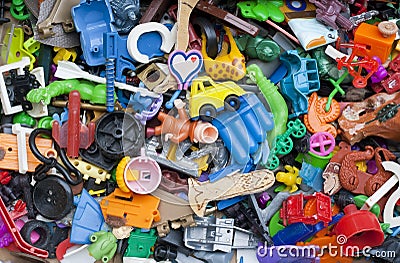
I feel like I'm drowning in stuff--broken toys, flower vases, school notebooks, wires and cables, mismatched dishes.  Where does it all come from?  When I moved to college as a freshman I had a few suitcases and a few boxes.  Everything my sister and I were taking fit in the family van.  When I left college I had a bit more, but could certainly move everything myself.  Over time things accumulate. Some of it is useful--furniture, bookcases, sheets and towels.  A lot of it isn't.  As our houses got bigger, we got more stuff. As our kids got older, we got more stuff.  I'm ready to shed it. I'd like to rent a dumpster and throw it all away. 

When we spent 6 months in Germany we knew we would be living in a furnished apartment, and took clothes and essentials.  It was like heaven to live in a small 2 bedroom apartment. We had everything we needed, but not much more. True, even there we ended up needing to ship back boxes of things we couldn't carry, but everything was manageable.

My older son recently moved into his first solo apartment. I was envious. There was a closet sized kitchen, a completely adequate bath, and a reasonable living room and bedroom.  I dream of how easy it would be to keep something that size clean and neat. How easy it would be to find anything you need. How liberating it would be to have so little room for stuff.

A few years ago my in-laws sold their home and moved into an apartment. Sorting through decades of stuff was a long and excruciating task.  I hope to never be in that situation. I want to shed myself of those things early in life, stop bringing new junk into the house and throwing out what is here.

It occurred to me as a life course sociologist, that our belongings have a trajectory. We accumulate then discard.  The economists like this inverted U shaped curve of life cycle accumulation.  I'd like to be on the downside of the U...dis-accumulating.

When I was young, my mother gave me and my older sisters a Christmas present of treasure boxes. Small, metal utility boxes about the size of a shoebox.  They even had keys.  Their purpose was for us to be able to store our treasures, especially things we didn't want our younger siblings to mess with.  Later, she gave us cedar chests, her version of a hope chest.  I've thought about those boxes lately, I don't have the treasure box anymore, but I do have the cedar chest.  It was my first piece of "nice" furniture, something to take with me when I left home.  It is one piece of stuff I want to keep, one connection and memory I don't want to give up, one treasure I want to hold onto.

Some days I wish I was back in the time when all my treasures would fit into a shoebox and a cedar chest would hold hope. 
                                                       

Thursday, June 14, 2012

Academic Summers

I'm often asked, "Why do you go to work in the summer?"  Here is my current "to do" list:

Write graduate program review
Read and write a critique of an article submitted for publication (peer review)
Start work on a new project on fear of falling and social isolation funded by a small grant
Work on a paper with two colleagues on military service and obesity
Work with colleagues at another university on a paper about osteoporosis, falls, and obesity
Prepare syllabus, lectures, and assignments for a course I haven't taught for two years.
Prepare syllabus, lectures, and assignments for a course I have taught every year for 3 years.
Create a website for a society that I am secretary/treasurer.
Coordinate plans for a group dinner (100 people) at a conference in August.

Monday, May 14, 2012

"It's in you."

Twice in the last week I've heard those words, "It's in you."  The first time was at the Hospice training when Rachel Naomi Remen's talked about service. One of her arguments was that serving others was an innately human desire, we learn early on in our lives that we are connected to others, that what we do affects others, and that we share feelings with others.  Our desire to serve stems from this idea of connectedness, this instinct to stand beside another.  One of the other points Remen made was that we all have stories to tell, that our stories make us who we are.

Today, I heard a gerontology colleague/friend, Anne Basting, interviewed on NPR. I've mentioned Anne's work on storytelling before. Her project, Timeslips, encourages creative storytelling among people with dementia.  She argues that rather than be frustrated by memory loss we should focus on the creative energies that may still be present in a person.  When talking about using her storytelling approach, she points out that no special training is needed because "It's in you." 

We all are storytellers and it is that storytelling that creates in us an ability to see beyond, to reach past, to connect.  It's in you.

Tuesday, May 8, 2012

A Life of Service

A few years ago I posted a note about Rachel Naomi Remen and her views on life and healing.  She is a physician who specializes in end of life care, and in training doctors to think more holisitically about their patients.  In that post, "Exactly what's needed,"  I told her story of the beginning of the world and how each of us has the ability to restore order in the world.  Whoever we are, whatever we are, we are exactly what is needed to help restore wholeness.

Today I attended a short seminar called "A Life of Service," which featured Dr. Remen.  She repeated her story, but then went on to talk about how these ideas can be applied to medicine and hospice care.  I'll talk about two ideas here: fixing and witnessing.

Fixing:  In the world of medicine we are focused on fixing things, we see the world as broken.  An alternative approach, Remen argues, is to see the world as hiding the goodness, the wholeness. Rather than fixing, we can help restore that wholeness, seek it out in everyone and everything.  She gives this equation: We help by using our strength, we fix by using our expertise, but we serve by using our "self" (our heart, our soul...).  We should spend less time on trying to fix something and more on trying to see the hidden wholeness in each other.  Since we are all human, and all connected, service is something we are, not something we need to learn.  Our own human suffering gives us common ground with others in pain.

Which leads to witnessing.  In service we don't take on someone else's pain, we don't take their suffering as our own. Your pain is your own.  But, we can recognize that the pain matters.  We can not dismiss it.  We can be beside someone in the face of pain. It is not our job to fix it, but to stand with it.

Tuesday, May 1, 2012

The Power of One Hour


What's the value of one hour?  I've been thinking about that a lot since I've started volunteering with Hospice.  My first few experiences were not particularly satisfying.  Unfortunately, most people don't enroll in hospice until the last week of their lives.  By the time the case has been evaluated and the needs identified, it is often too late for a volunteer to help.  Families receive the medical care and support they need for those last few days, but, I think, there are many more things a hospice organization can provide.  So, my first few hospice patients died before I could even see them.  Maybe the coordinator was feeling bad for me, it can be discouraging to go through the training and be eager to go out and "do good" and find that nobody needs you!  Maybe she felt I had some patience or tolerance that other volunteers might lack.  Maybe I was just the next up on the list. 

For whatever reason, I was given the assignment of  visiting an individual in a group home.  He is blind and non-verbal.  I sit with him and gently stroke his head and hand for an hour, once a week. Is it worth it?  I found myself wondering that the other day.  Does an hour of attention a week make any difference?  But, then I reframed the question and thought of all of the "one hours" I experience in a week and how valuable they feel to me.  For example, about once a week I have lunch with two friends.  We go out for a slice of pizza, take a short walk if the weather is nice, and are back in our offices within 60 minutes.  I enjoy our time together, look forward to those days.  Once a week I have lunch with an old colleague who has dementia.  We make sandwiches, eat, chat, and take a walk or play cards.  He certainly seems to look forward to those 90 minute visits.  Seeing my counselor every few weeks for 50 minutes is some of my best spent time.  Sitting down to watch "House" with my son on Monday nights is a time I anticipate with pleasure.  My Thursday morning hour with a personal trainer feels worthwhile.  Why should my one hour of attention mean anything less?

If we think about all the things we do in a week that take one hour, that hour seems like a much more powerful unit of time.  So much can happen in 60 minutes.

Wednesday, April 25, 2012

Another thing for moms to worry about....

When you become a mother you take on an enormous responsibility.  All of  your child's ills will most likely be traced back to you at some point in time.  I have a friend who jokes that she keeps a notebook to record all the bad things she has done as a mother so that her kids will not have to remember them later in therapy--they can just look them up. For a long time we have known that prenatal development is important in many ways and maternal conditions while pregnant can influence a child's physical, emotional, and intellectual development for the rest of their lives.

Read an article today about stress during pregnancy.  While pregnant with my second son I was under a fair amount of stress. A couple months after finding out I was pregnant I found out I would be out of a job. I had been turned down for tenure at Penn State and would need to find a new position.  Stressful.  I found a new job quickly, fortunately, but then had to pack up and move. Stressful.  Seven months pregnant I had to find a new doctor, start a new job, settle into a new house, find care for my young son. Stressful.

Today I read this opening paragraph...During gestation, the fetal brain develops dramatically as structures and connections form, providing the foundation for all future development. The fetal environment plays a critical role in these early neural processes, for better or for worse. Scientists now know that exposure to maternal stress can sometimes have deleterious effects on the fetus, depending on the cause, timing, duration, and intensity of stress. Great. I've ruined my second child's chances in life....Then there was this hopeful next sentence....Fortunately, postnatal interventions, such as a secure parent-infant bond and an enriched environment, can buffer the potential negative consequences.


The article discusses some interesting time periods in the development of the fetal brain, such as when synapses are formed (3rd trimester), myelination (last few months continuing for 9 months after birth)...

But, in the end there was a little reassurance that maybe stress wasn't so bad afterall:
Exposure to psychosocial stressors, on the other hand, has more nuanced effects on the developing brain. Overgeneralized assertions, such as “Stress is bad for you and your baby,” may inadvertently contribute to anxiety and worry among pregnant women. In fact, some researchers reported a beneficial effect of moderate psychosocial stress during pregnancy on certain child neurodevelopmental outcomes, noting that such stress may have different consequences depending on factors including its duration, intensity, context, as well as the social support systems available to the mother. This is consistent with the stress-inoculation theory, which posits that early-life stressors may provide a challenge that, when successfully overcome, can induce advantageous adaptations.

Maybe I just innoculated my son reallly well.....
The study, by Claudia Buss, et al,  is reported in Cerebrum:
http://dana.org/news/cerebrum/detail.aspx?id=37188

Friday, April 13, 2012

Some of the joys of teaching...

Every now and then I have a day when I really like my job.  Overall, I love my job. I like the mixture of activities, the fact that each day is different.  I like the opportunity to work with students. I like doing my own research. I like working with my colleagues.  I even, sometimes, like doing administrative work.

I have the privilege this semester of teaching our senior thesis class. This is an optional elective that students can take in their last semester. The course requires them to develop their own research idea, collect data, analyze their results and then make a presentation.  The students who choose the option are usually the better students, but certainly they are the more motivated students. It is a small class, 12 students, all women, this year. Working with a group of smart, motivated, interesting students is a treat.  They are really excited about their topics, they want to do a good job, they are fun and funny.

But, today was special.   They are at the stage where they are beginning their analyses. I was working with three students as they began making tables and graphs, interpreting their results.  They needed some help with the practical matters of data management and using the statistical software, but once they got started they were able to really take off.  At one point, one of them said, "This is fun!"  What a pleasure to hear.  Isn't that we all long for as teachers, that moment when a student feels like they are learning...and enjoying it.

I felt very lucky to be sitting there today to hear the comment, to see the expression, to feel the energy.

It was a good day.